Meta, formerly known as Facebook Inc, offers a powerful and flexible advertising ecosystem for entrepreneurs and brands of all sizes. Advertisers can tap into advanced targeting options, a wide range of placements, and the ability to run campaigns across multiple platforms including Facebook and Instagram all from a single ads manager.
Because everything is managed inside Meta’s Ads Manager which lives within Facebook Business tools, campaigns running across both platforms are often lumped together as “Facebook ads”.
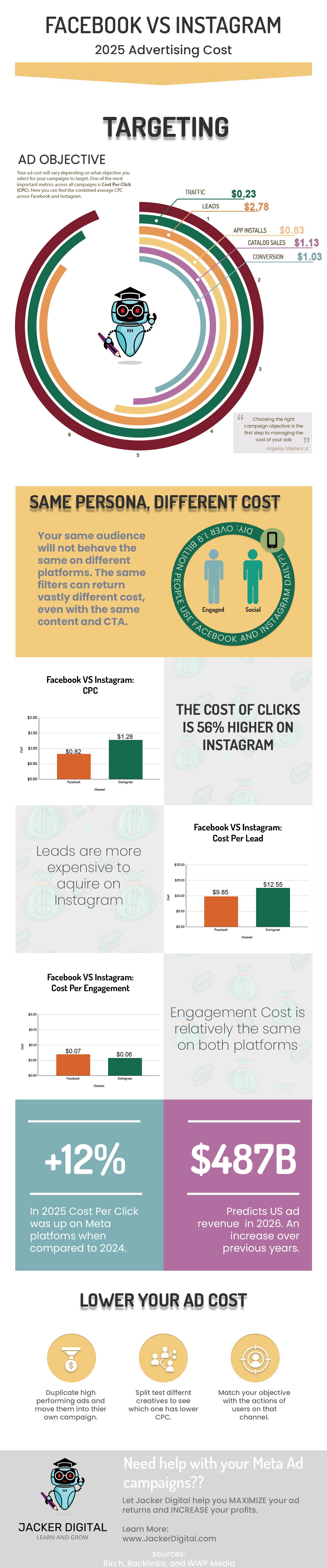
However, while your ads may look identical and target the same audience on both platforms, the results rarely behave the same way. Facebook and Instagram users interact with content differently, and those behavioral differences show up clearly in performance metrics like cost per click, cost per lead, and engagement. As a result, the same campaign can produce noticeably different costs depending on where the ad is served.
Why The Difference?
Even though Meta owns both platforms, Facebook and Instagram are built for very different types of behavior. How people use each app directly affects how they see ads, how they interact with them, and ultimately how much those interactions cost.
Instagram is still very much a mobile first, content driven platform. People open Instagram to scroll, watch short videos, tap through Stories, and react visually. Most user actions are lightweight and fast likes, comments, saves, and shares. Because users are already in a content consumption mindset, Instagram tends to reward ads that feel native, visually strong, and entertaining with higher engagement. That engagement can look great on paper, but Instagram users are often less eager to leave the app. Clicking out to a website, form, or checkout introduces friction, which is why clicks and leads often cost more on Instagram.
Facebook functions more like a digital hub than a pure content feed. People use Facebook to check groups, read posts from friends and family, browse Marketplace, watch longer videos, and even research businesses. Because there are more reasons to be on Facebook, users are more accustomed to clicking links, filling out forms, and taking actions off the platform. Facebook also offers a wider variety of ad placements, which gives the algorithm more flexibility to find lower cost opportunities for traffic and conversions.
Another major factor is intent. Instagram users are often in discovery mode. They are open to seeing new brands but not always ready to act immediately. Facebook users tend to show higher intent behaviors like joining groups, clicking external links, or comparing options. That difference in intent plays a big role in why Facebook often delivers cheaper clicks and leads, even when targeting the exact same audience.
In short, Instagram is optimized for attention and engagement, while Facebook is optimized for actions and movement across the platform. When you understand that difference, the cost gap between the two starts to make a lot more sense.
Whats Next?
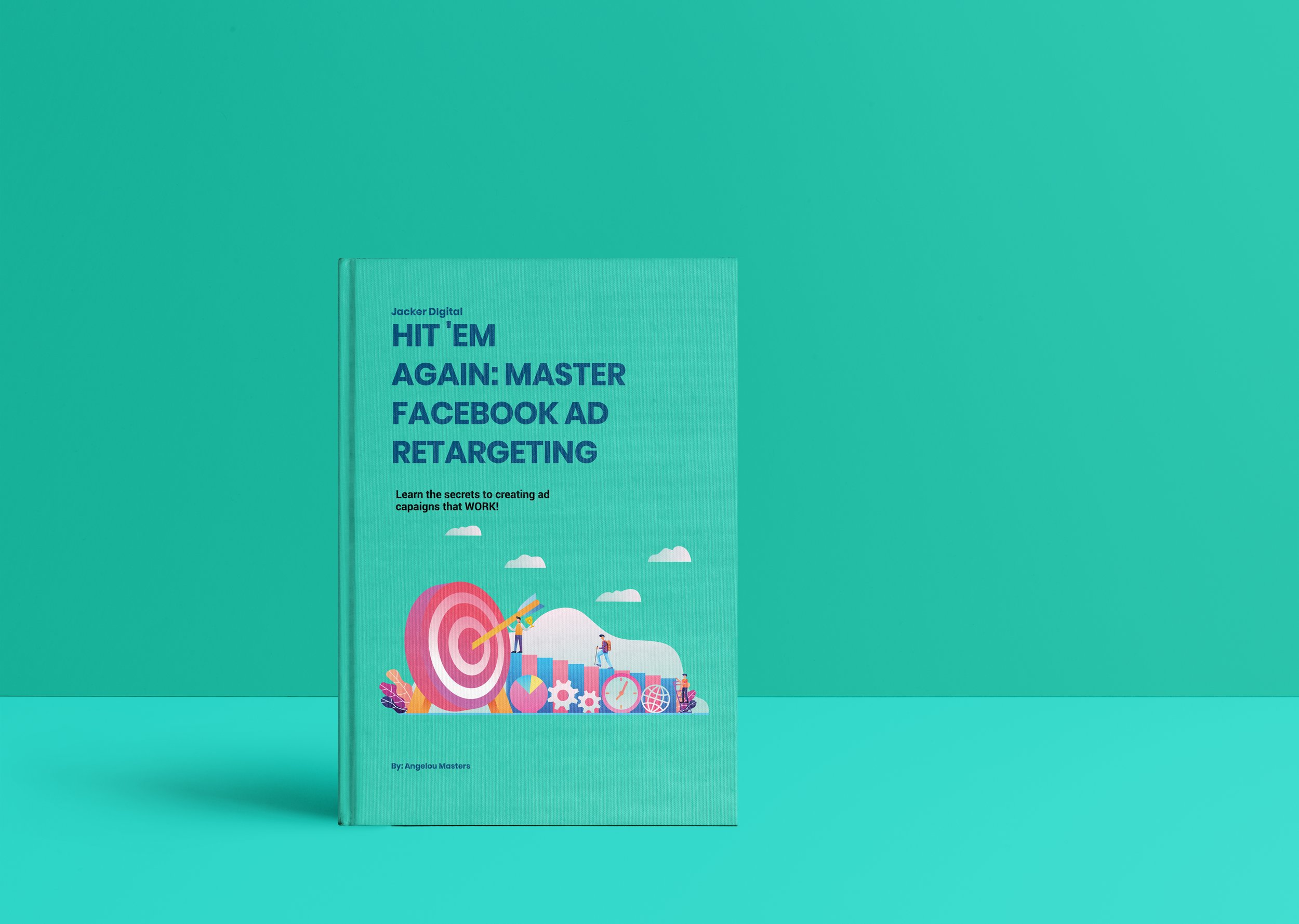
Download our free ebook that will help you understand all the things you’ll need to know to take your ads to the next level!
More Articles You May Like: